Chinese Lunar Exploration Program
Introduction
The Chinese Lunar Exploration Program, prominently recognized as the Chang'e program, is a comprehensive space exploration initiative launched by the China National Space Administration (CNSA). Named after the Chinese moon goddess, Chang'e, the program underscores China's ambition to venture into space exploration, particularly focusing on lunar missions. Through various missions, the program aims to make significant scientific and technological contributions to humanity's understanding of the moon. It involves the use of orbiters, landers, and rovers to conduct detailed surveys and experiments on the lunar surface. As an integral component of China's growing space capabilities, the program reflects the country's dedication to becoming a leading space-faring nation, marking significant achievements in exploration, scientific discovery, and international cooperation.
History
Early Concepts
The genesis of the Chinese Lunar Exploration Program can be traced back to China's initial aspirations to delve into space exploration, evident through early conceptualizations and feasibility studies conducted by Chinese scientists and engineers. The program's roots lie in the broad vision of establishing a robust presence in space, inspired by legends and tales such as that of the moon goddess Chang'e. Early discussions revolved around the potential scientific and technological objectives that could be achieved through lunar exploration. These conceptual discussions laid the groundwork for what would eventually evolve into a systematic program aimed at exploring and studying the moon's surface and subsurface characteristics.
Development Phases
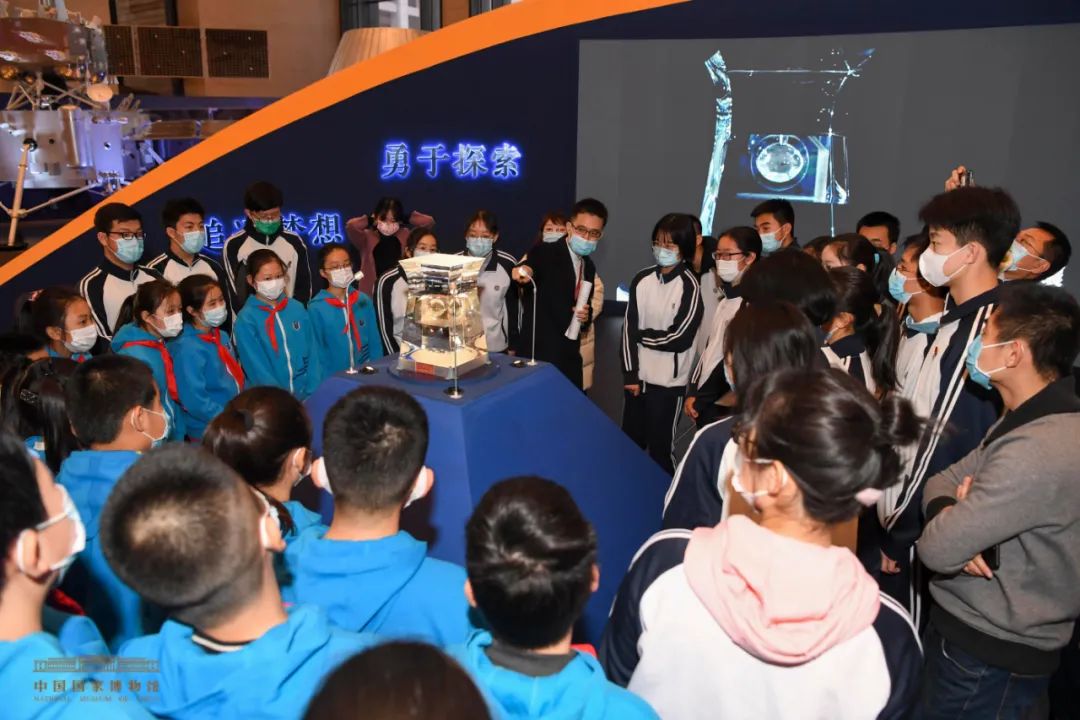
The development of the Chinese Lunar Exploration Program unfolded in multiple phases, each aimed at achieving specific milestones. Phase One was primarily focused on launching orbiters, exemplified by the Chang'e-1 mission, which marked China's first significant foray into lunar exploration. This phase emphasized surveying the lunar surface, capturing detailed images, and gathering fundamental data crucial for subsequent missions. Phase Two introduced landers and rovers, with the Chang'e-3 mission successfully deploying the Yutu rover, marking China's first soft landing on the moon. This phase focused on conducting surface and subsurface experiments, enhancing understanding of lunar geology. The program's Phase Three, includes sample return missions, highlighted by the Chang'e-5 mission which successfully returned lunar samples to Earth, demonstrating China's advanced capabilities in space exploration.
Objectives
Scientific Goals
The scientific objectives of the Chinese Lunar Exploration Program are expansive, aiming to advance the understanding of the moon's composition, structure, and evolution. The program seeks to conduct in-depth studies of lunar geology, investigating the moon's surface composition, mineralogy, and topography. Additionally, the program aims to explore the lunar environment, including temperature variations, radiation levels, and magnetic fields, providing insights into the broader context of planetary science. By analyzing samples and conducting experiments, the program aspires to gather data that could inform theories about the formation and evolution of the moon, as well as the broader solar system.
Technological Goals
Technologically, the Chinese Lunar Exploration Program is designed to advance China's capabilities in spacecraft design, navigation, and operation. The program emphasizes the development of sophisticated spacecraft systems, capable of performing complex maneuvers, such as landing, roving, and sample collection on the lunar surface. It aims to enhance China's expertise in remote sensing, data transmission, and autonomous robotic operations. By achieving these technological goals, the program seeks to establish a foundation for future manned lunar missions and potential exploration of other celestial bodies. The program also serves as a platform for testing new technologies, such as advanced propulsion systems and life support technologies, which could be critical for long-duration space missions.
Missions
Chang'e Program
The Chang'e program is the cornerstone of the Chinese Lunar Exploration Program, encompassing a series of missions named after the moon goddess, Chang'e. Each mission within the program is designed with specific objectives, progressively building on the achievements of previous missions. The initial missions, such as Chang'e-1 and Chang'e-2, focused on lunar orbiting, providing high-resolution images and data essential for planning subsequent landing missions. Chang'e-3 marked China's successful soft landing on the moon, deploying the Yutu rover, which conducted significant surface exploration activities. The program continued with Chang'e-4, achieving the first landing on the moon's far side, a milestone in global space exploration. Chang'e-5 represented a groundbreaking achievement by successfully returning lunar samples to Earth, showcasing China's advanced capabilities in lunar exploration.
Rovers and Landers
Rovers and landers play a pivotal role in the Chinese Lunar Exploration Program, facilitating direct interaction with the lunar surface. The Yutu rover, deployed during the Chang'e-3 mission, conducted surface imaging, soil analysis, and lunar geology experiments. Despite facing technical challenges, Yutu provided valuable scientific data and insights. The success of the Chang'e-4 mission, which deployed the Yutu-2 rover on the moon's far side, further demonstrated China's capability in operating rovers in challenging environments. These rovers are equipped with advanced scientific instruments, capable of conducting experiments and relaying data back to Earth. The landers serve as platforms for deploying rovers and conducting stationary experiments, contributing significantly to the program's scientific objectives.
Achievements
Scientific Discoveries
The Chinese Lunar Exploration Program has made significant scientific discoveries, enhancing understanding of the moon's geology and environment. Through missions like Chang'e-3 and Chang'e-4, the program has provided detailed images and data of the lunar surface, revealing insights into its mineral composition and topography. The analysis of lunar rocks and soil has contributed to the understanding of the moon's formation and evolutionary history. These missions have also provided valuable data on the moon's radiation environment and magnetic fields, crucial for future manned missions. The successful return of lunar samples by Chang'e-5 offers the potential for groundbreaking scientific research, allowing scientists to conduct detailed analyses of the moon's composition in laboratories on Earth.
Technological Milestones
The program's technological milestones are marked by significant advancements in spacecraft design and operation. The development and deployment of orbiters, landers, and rovers demonstrate China's growing expertise in space exploration technologies. The successful soft landing and operation of rovers on the lunar surface, particularly on the moon's far side, underscore China's capabilities in executing complex space missions. The Chang'e-5 mission's successful return of lunar samples to Earth represents a significant technological achievement, showcasing advanced capabilities in spacecraft navigation, sample collection, and re-entry operations. These technological milestones highlight China's ability to conduct sophisticated space exploration missions and contribute to the broader goals of international space exploration.
International Collaboration
International collaboration is an important aspect of the Chinese Lunar Exploration Program. The program has involved collaborations with various international space agencies and scientific organizations, facilitating data sharing and joint research initiatives. Collaborative efforts have included scientific exchanges, joint experiments, and cooperative missions, contributing to a broader understanding of the moon's characteristics. These collaborations enhance the program's scientific impact and foster a spirit of international cooperation in space exploration. By working with global partners, China aims to leverage diverse expertise and perspectives, contributing to the collective advancement of lunar science and exploration.
Impact and Significance
The impact and significance of the Chinese Lunar Exploration Program extend beyond scientific and technological achievements. The program represents a major step forward in China's space exploration capabilities, elevating the country's status as a leading space-faring nation. It inspires scientific curiosity and technological innovation, encouraging a new generation of scientists and engineers to pursue careers in space exploration. The program's achievements contribute to humanity's broader efforts to explore and understand the moon, offering insights that could inform future exploration missions. Additionally, the program's international collaborations foster goodwill and cooperation among nations, highlighting the potential for space exploration to bring countries together in the pursuit of common scientific goals.








